Peter Gabriel - Steam
Music Video
| Artist | Peter Gabriel |
| Song | Steam |
| Album | Us |
| Director | Stephen R. Johnson |
| Genre | Pop |
| Intro | No |
| Outro | No |
| Sound Mix | Stereo |
| Technical Specifications | colour - format unknown |
| Technique | CGI Composite |
Wiki
Synopsis
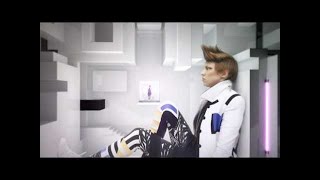
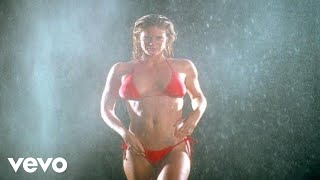
Peter Gabriel performs "Steam" amid a rapidly shifting collage of surreal images, digital transformations, and exaggerated sexual imagery. He appears in a variety of guises, including a deliberately over-muscled figure, while women, dancers, household objects, fire, water, and abstract computer-generated forms flash and morph around him. The video turns the song's sensual confidence into a playful visual spectacle, blending live action with early-1990s computer animation and motion effects. Its deliberately excessive style makes the performance feel like a constantly mutating fantasy rather than a conventional narrative.
Factoids & Trivia
- "Steam" was the second single from Gabriel's 1992 album *Us*. The single was released on January 11, 1993.
- The video was made in association with Colossal Pictures and used several then-cutting-edge techniques, including motion capture, particle systems, digital video processing, virtual environments, and computer-generated animation.
- A technical presentation about the production noted that approximately 1.5 minutes of computer graphics were created in five weeks.
- Gabriel suggested the idea of appearing with an artificial muscular physique. The exaggerated body became one of the video's most memorable jokes and helped reinforce its playful treatment of masculine posturing.
- The video's erotic imagery was not treated as straightforward seduction. The broader *All About Us* project described one of its themes as the overturning of sexual stereotypes.
- At the 1993 MTV Video Music Awards, "Steam" won for Best Visual Effects and Best Editing. The editing award went to Douglas Jines.
- The video won the Grammy Award for Best Short Form Music Video at the 1994 ceremony.
- "Steam" was later included in the 1994 video collection *Computer Animation Festival Vol. 2.0*, reflecting its status as an early example of high-profile computer animation in a music video.