Kate Bush - Hammer Horror
Music Video
| Artist | Kate Bush |
| Song | Hammer Horror |
| Director | Keef |
| Intro | No |
| Outro | No |
| Sound Mix | Stereo |
| Technical Specifications | colour - format unknown |
Wiki
Synopsis
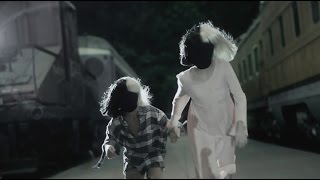
Kate Bush performs in a stark black space alongside a mysterious, masked dancer. Her movements suggest a performer caught between fear, guilt, and the demands of a role, while the dancer becomes an ominous presence who mirrors and confronts her. The choreography grows increasingly tense, culminating in a disturbing encounter that evokes the ghostly, theatrical world behind the song. The video uses stark lighting, expressive movement, and minimal staging to turn "Hammer Horror" into a compact piece of gothic performance art.
Factoids & Trivia
- "Hammer Horror" was released in October 1978 as the first single from Kate Bush's second album, Lionheart. It was her third single overall.
- The song's narrative concerns an actor who takes over the role of Quasimodo after the original performer dies, only to be haunted by the dead actor's jealousy and resentment.
- Despite its title, the song was not directly based on a Hammer film. Bush drew inspiration from Man of a Thousand Faces, the 1957 film about actor Lon Chaney, in which James Cagney plays Chaney performing the role of Quasimodo.
- Bush described the idea as an "actor in an actor in an actor," reflecting the song's layered treatment of performance, identity, and artistic rivalry.
- The promotional film reduces the song's theatrical story to a symbolic dance between Bush and a black-masked figure. The masked partner represents the threatening presence that hangs over the narrator.
- Bush devised the dance routine while she was in Melbourne on a promotional visit. She later performed the song on the Australian television program Countdown.
- The video's stark black background and concealed dancer give it a deliberately stripped-down, stage-like quality, contrasting with the elaborate period setting suggested by the lyrics.
- "Hammer Horror" reached No. 44 on the UK singles chart. Its B-side was "Coffee Homeground," another song from Lionheart.
- The video was later included in Kate Bush: The Single File, the 1983 compilation of her early promotional films.
Lyrics
|
You stood in the belltower, But now you're gone. So who knows all the sights Of Notre Dame? They've got the stars for the gallant hearts. I'm the replacement for your part. But all I want to do is forget You, friend. Hammer Horror, Hammer Horror, Won't leave me alone. The first time in my life, I leave the lights on ... |
© Kate Bush - Hammer Horror.
This is an excerpt, provided as citation under fair-use.