George Michael - Freeek!
Music Video
| 2002
| Artist | George Michael |
| Song | Freeek! |
| Director | Joseph Kahn |
| Genre | Pop |
| Intro | No |
| Outro | No |
| Companies involved in Production | Wicked Talent/ Bat Pack Casting |
| Full Story | Mass fetish orgy |
| Sound Mix | Stereo |
| Technical Specifications | colour - format unknown |
| Release date |
Wiki
Synopsis
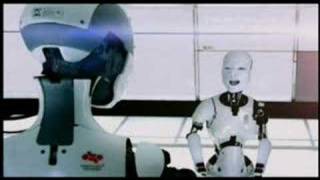
In a neon-lit cyberpunk city, George Michael arrives as a shape-shifting avatar of sexual excess and commercial fantasy. Moving through futuristic streets filled with mechanical bodies, provocative dancers, barking Dobermanns, and giant digital displays, he appears in a series of exaggerated guises, from pinstriped salesman to leather-clad superhero. The journey builds toward a confrontation with a powerful red-haired dominatrix figure, turning the song's lustful energy into a campy, surreal spectacle about desire, technology, and the commodification of sex.
Factoids & Trivia
- The video debuted in March 2002 alongside "Freeek!", the first single from the album *Patience*, which was not released until 2004.
- Contemporary production coverage reported a budget of approximately $1.5 million, making it one of the era's most expensive music videos.
- The 4-minute-28-second clip contains around 180 visual-effects shots. The effects work was completed in roughly four weeks.
- The production used extensive computer-generated imagery rather than relying solely on conventional live-action sets. One notable effect is the nude cyber-woman whose internal circuitry glows beneath her skin as she activates herself by tilting her head.
- The clip's visual language draws heavily on science-fiction cinema, particularly the grimy, commercialized future associated with *Blade Runner*, while adding elements of fetish fashion, comic-book parody, and nightclub imagery.
- Its sexual content caused broadcasting disputes in several countries. In the United Kingdom, the BBC's airing of an edited version on *Top of the Pops* led to 68 complaints, with particular concern over erotic imagery, suggestive movement, and bondage scenes.
- The video's deliberately excessive tone was part of its provocation. Rather than presenting sexuality realistically, it turns advertising, pornography, fashion, and futuristic technology into an oversized piece of pop-art satire.
- The song's release campaign included several official remixes, while the video itself circulated in edited forms for daytime television and more explicit versions for late-night or specialist broadcasts.
Videos

Click to play
from: www.youtube.com

"director's cut"
Currently playing
Currently playing
from: vimeo.com