Flying Lotus - Tiny Tortures
Music Video
| Artist | Flying Lotus |
Wiki
Synopsis
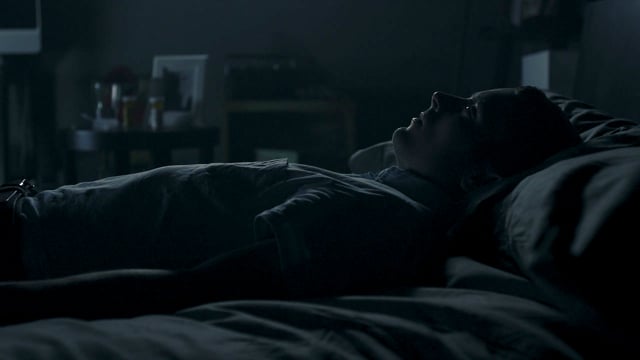
Elijah Wood plays a recently amputated former baseball player struggling with pain, grief, and prescription-drug dependence after a car accident kills his girlfriend. Alone in a dark bedroom, he watches everyday objects float through the air and assemble themselves into a mechanical replacement arm. The imagined limb briefly restores a sense of control, but the hallucination grows increasingly unstable. As the room gives way to surreal visions, the video reveals the destructive reality beneath his fantasy and ends on a grim, self-inflicted note.
Factoids & Trivia
- "Tiny Tortures" was released on November 29, 2012, as part of the promotional campaign for Flying Lotus' fifth studio album, "Until the Quiet Comes."
- Elijah Wood was a mutual admirer of Flying Lotus and the video's creative team. Their collaboration developed after connecting online rather than through a conventional casting process.
- The video's treatment was built around survivor's guilt, addiction, and the idea that the character's former hobbies - including baseball, video games, and puzzles - all depended on having two hands.
- Concept artist Ben Mauro designed the replacement arm. Its construction combines toys, small electronics, model-like parts, and other personal objects, making it feel assembled from fragments of the character's former life.
- Much of the visual work was created with Maxon's Cinema 4D. The production also used motion capture, 3D scanning, digital doubles, and tracking techniques to blend Wood's performance with the computer-generated limb.
- Because the video was designed to remain extremely dark, the production used dimmable LED strips and additional lights hidden in the set. These provided enough information for the visual-effects work without flattening the heavy shadows.
- A silicone practical version of the arm stump was scanned so that the digital arm could be integrated more convincingly into the live-action footage.
- The production's dark tone was deliberate. The creative team described the track as a deeply nocturnal piece and shaped the video around that mood rather than softening its subject matter.
- A behind-the-scenes process video was released shortly after the music video, showing the arm's development, motion tests, effects work, and animation stages.