The Rolling Stones - Like A Rolling Stone
| Artist | The Rolling Stones |
| Song | Like A Rolling Stone |
| Album | Stripped |
| Director | Michel Gondry |
| Director of Photography | Andy Earl |
| Producer | Georges Bermann (at Partizan Midi Minuit) |
| Genre | Rock |
| Genre | Classic Rock |
| Intro | No |
| Outro | No |
| Production Company | Courlander |
| Production Company | Cathy Hood) |
| Production Company | Partizan Midi Minuit |
| Production Company | Pete Chambers |
| Notes | one of the first videos using morphing stills to simulate motion. It also features the frozen-time effekt. |
| Production time | 1 day |
| Song Awards | 1996 Clio Award(Music Video-Rock/Heavy Metal) |
| Sound Mix | Stereo |
| Technical Specifications | colour - format unknown |
| VFX Company | Buf Compagnie |
| Release date |
Wiki
Plot Summary
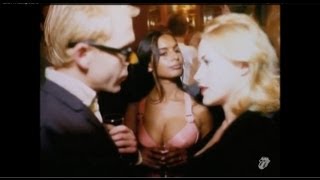
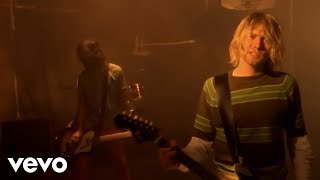
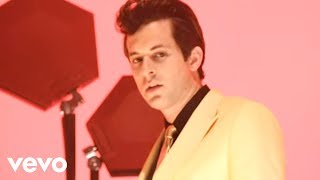
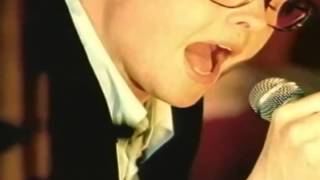
A disoriented woman, played by Patricia Arquette, drifts through a grimy urban landscape while the world around her seems to buckle and mutate. Shop windows, streets, crowds, and interiors twist into unstable dream spaces, reflecting her drugged, hallucinatory state. The Rolling Stones appear in a dark club setting, performing the song with rough, live-wire intensity. Mick Jagger and the band repeatedly merge with the fractured environments through elaborate morphing effects. The video ends less as a conventional narrative than as an immersion in a mind losing its grip on ordinary space and time.
Factoids & Trivia
Michel Gondry directed the video, which was released in 1995 to promote the Stones’ cover of Bob Dylan’s “Like a Rolling Stone,” recorded for the album Stripped. Patricia Arquette appears as the central character, while Mick Jagger, Keith Richards, Ronnie Wood, Charlie Watts, and Jay Kay are also credited.
The shoot took place at Bagley’s Warehouse in London on September 21, 1995. The performance footage was lip-synced to the Stones’ live recording of the song, with the principal track recorded at Brixton Academy in London on July 19, 1995.
Gondry and BUF Compagnie developed a distinctive “frozen-time” effect for the clip years before The Matrix popularized a related technique. Instead of simply freezing an actor against a moving camera, the video morphs perspectives and surrounding space into something unstable and dreamlike.
Photographer Andy Earl says the video was assembled from approximately 12,000 still photographs, animated and morphed into movement. Another account describes more than 1,000 digital morphs being used across the finished piece.
The visual concept was intentionally connected to intoxication and hallucination. BUF artist Dominique Vidal recalled that Gondry wanted Arquette’s character to remain relatively clear while the background became distorted, avoiding more familiar echo and double-exposure clichés.
The clip was nominated for British Video of the Year at the 1996 BRIT Awards and received a 1996 Clio Award in the Music Video—Rock/Heavy Metal category.