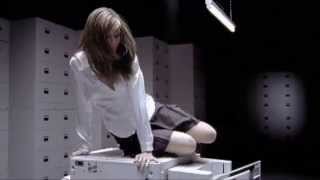
Fiona Apple - Criminal
Music Video
| 1997
| Artist | Fiona Apple |
| Song | Criminal |
| Director | Mark Romanek |
| Intro | No |
| Outro | No |
| Sound Mix | Stereo |
| Technical Specifications | colour - format unknown |
| Release date |
Wiki
Synopsis
Fiona Apple appears in a dim, cluttered house filled with sleeping, lounging and partying bodies. Moving through the rooms in lingerie, she stares into the camera, poses with other guests and drifts between playful, confrontational and vulnerable moods. The intimate close-ups and disjointed party imagery turn the song's confession of sexual guilt and insecurity into a display of self-conscious voyeurism. Rather than presenting a conventional narrative, the video captures a young woman performing desire while visibly wrestling with how she is being watched.
Factoids & Trivia
- The video was filmed in May 1997 and released in June 1997 as the promotional clip for "Criminal," Apple's breakthrough single from her debut album, Tidal.
- Its loose, snapshot-like imagery was styled in part after Nan Goldin's photographs of nightlife, intimacy and alienation. The video was also discussed as a visual homage to the world of underground party photography rather than a polished pop fantasy.
- Apple said the video's revealing presentation was connected to her own discomfort with her body. She intended the experience as a way to confront her insecurities, although she later expressed regret about making the clip and felt that its imagery had overshadowed the song.
- Harris Savides' cinematography helped give the video its murky, tactile look. The work won the MTV Video Music Award for Best Cinematography in 1998.
- The video's sexualized treatment of a young female artist provoked considerable criticism in the late 1990s. Commentators alternately saw it as self-exposure, exploitation or a deliberate challenge to the way female performers were viewed.
- "Criminal" was one of only two 1997 music videos featured in the Beavis and Butt-Head special "Beavis and Butt-Head Do Thanksgiving."
- The clip remained influential enough to inspire a near frame-for-frame queer remake for It Was Romance's 2015 song "Hooking Up with Girls," which recreated many of its costumes, props and compositions.
Lyrics
|
I've been a bad bad girl I've been careless With a delicate man And it's a sad sad world When a girl will break a boy Just because she can Don't you tell me to deny it I've done wrong and I want to Suffer for my sins I've come to you 'Cause I need Guidance to be true ... |
© Fiona Apple - Criminal.
This is an excerpt, provided as citation under fair-use.