Captain Beefheart - Lick My Decals Off, Baby
Music Video
| 1970
| Artist | Captain Beefheart |
| Song | Lick My Decals Off, Baby |
| Album | Lick My Decals Off |
| Album | Baby |
| Director | Don Van Vliet |
| Intro | No |
| Outro | No |
| Label | Warner Brothers Records |
| Music Producer | Warner Brothers Records |
| Sound Mix | Stereo |
| Technical Specifications | colour - format unknown |
Wiki
Synopsis
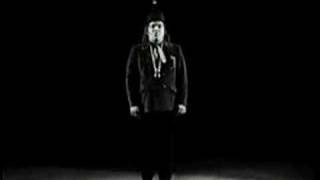
Captain Beefheart turns an album commercial into a brief burst of surrealist performance art. In stark black and white, the Magic Band appear masked and mime with kitchen utensils, while Beefheart delivers the song's provocative premise with deadpan theatricality. The imagery shifts between absurd domestic gestures and deliberately awkward promotional poses, making the advertisement feel less like a sales pitch than an attack on conventional pop presentation. The result is a strange, confrontational miniature that matches the music's jagged energy and anti-commercial spirit.
Factoids & Trivia
- The film was created as a television commercial for the 1970 album, rather than as a conventional narrative music video. It runs for roughly one minute.
- The spot was conceived by Beefheart himself and produced through Warner/Reprise's emerging audiovisual operation, associated with Van Dyke Parks.
- Its black-and-white presentation and surreal imagery were far outside the style of standard record advertising of the period.
- The commercial included masked Magic Band members pretending to play kitchen utensils, excerpts from "Woe-Is-uh-Me-Bop," and Beefheart tipping a bowl of porridge onto the center line of a road.
- Los Angeles television station KTTV reportedly refused to air the advertisement, objecting to the album's provocative title and its unusual content.
- Although it received little conventional television exposure, the film later entered the Museum of Modern Art's video collection and was presented as an early example of surrealist rock-related visual expression.
- The commercial is often cited as an early music video that also functioned as an actual album advertisement, anticipating the hybrid promotional films that became more common later in the 1970s.