Nate Dogg - Never Leave Me Alone
Music Video
| Artist | Nate Dogg |
| Genre | Hip Hop & Rap |
Wiki
Synopsis
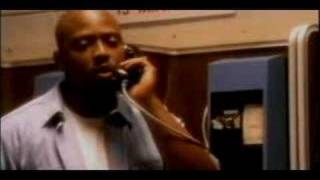
Nate Dogg is arrested and sent to prison, leaving his wife and young son behind. As he struggles with confinement, the video focuses on his attempts to preserve the family bond through visits and communication. Snoop Dogg appears during his verse, reinforcing the song's mixture of melodic R&B and West Coast rap. The story presents the track as more than a romantic plea: it is a father's fear that incarceration will cost him the love and presence of his family.
Factoids & Trivia
- The video was released in October 1996, around the single's original release and months before Nate Dogg's debut album, "G-Funk Classics, Vol. 1 & 2," arrived in 1998.
- The prison storyline reflects the song's deeper subject. Contemporary coverage described it as the story of a father facing a possible sentence under California's three-strikes law and worrying about whether his companion and infant son would remain close to him.
- The subject had a personal connection for Nate Dogg. In 1996, he had recently faced an armed-robbery trial; he was acquitted on one charge, while the jury could not reach a verdict on another.
- The track was produced by Kurupt, who later explained that the music was built around a flip of Roberta Flack and Donny Hathaway's "Where Is the Love?"
- "Never Leave Me Alone" became one of Nate Dogg's notable early showcases as an R&B singer rather than a conventional rapper. Snoop Dogg supplies the guest rap, while Val Young contributes background vocals.
- The video's prison premise was later echoed by 50 Cent's "21 Questions," whose 2003 video also places a male protagonist behind bars while he tries to maintain a relationship. Nate Dogg appeared in that video as a fellow inmate.