Deichkind - Denken Sie Groß
Music Video
| Germany
| 2015
| Artist | Deichkind |
| Album | Niveau Weshalb Warum |
Wiki
Synopsis
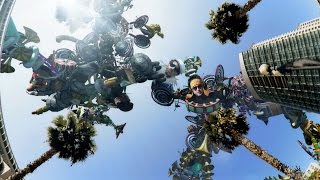
A ten-year-old boy presents a supposedly foolproof tutorial for making an "award-winning music video." Working at a computer, he digitally rebuilds Deichkind and their outrageous stage props from photographs, turning the band's visual history into an ever-expanding 3D monster. The animated creation grows increasingly grandiose, breaking free from the screen and embarking on a surreal campaign of world domination. The clip's exaggerated ambition mirrors the song's satirical motivational language, transforming a childhood computer lesson into a flamboyant fantasy of fame, technology, and megalomania.
Factoids & Trivia
- The video was released on January 21, 2015, shortly before Deichkind's sixth studio album, "Niveau Weshalb Warum," arrived on January 30.
- The concept is deliberately meta: the child explains how to create a music video while the audience watches that process become the music video itself.
- The digital sculpture is assembled from archive photographs of Deichkind, including images of the band's costumes, stage gadgets, and homemade live-show props.
- The production took six weeks. During the first three weeks, the modeling process was recorded daily and exchanged with the editing team every two to three days.
- The fast modeling sequences were enhanced with industrial sound effects, including sounds modeled on knitting machines and large hydraulic systems.
- Elliot D., who plays the boy, had no acting experience. Most of his lines and dialogue were improvised to keep his performance natural.
- The production used Autodesk 3ds Max, SynthEyes, Adobe After Effects, CrazyTalk Pro, and Final Cut Pro.
- The clip was completed only two days before its release, with final compositing revisions still being delivered during the last stage of post-production.
- "Denken Sie Gross" received an Honorary Mention in the Computer Animation / Film / VFX category of the 2015 Prix Ars Electronica.
- The video extends Deichkind's long-running do-it-yourself aesthetic: the band's deliberately improvised-looking live props are reimagined as high-tech digital objects, making the transformation from trash-built stage equipment to a gigantic virtual creation part of the joke.