周華健 潑墨 - Perpetual War
Music Video
| Artist | 周華健 潑墨 |
Wiki
Synopsis
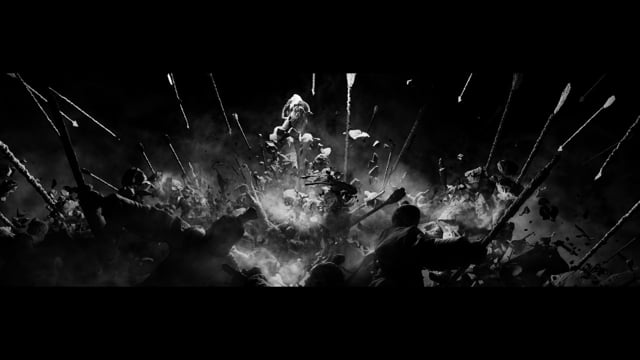
Wakin Chau moves through a vast historical corridor filled with stone figures, calligraphic inscriptions, and images drawn from China's past. As he performs, famous rulers, generals, scholars, poets, and warriors appear as fragments of a larger cultural memory. The imagery gradually connects ancient battles with modern warfare, suggesting that human conflict repeatedly reshapes history while leaving only ruins behind. Zhang Dachun also appears within the museum-like world, reinforcing the video's blend of music, literature, painting, and historical reflection.
Factoids & Trivia
- "Perpetual War" is the English title used for "Po Mo," the first featured song from Wakin Chau's 2013 album "Jiang Hu."
- The music video was produced over nearly three months and combines live-action performance with extensive 3D environments.
- The production team created approximately 300 stone figures representing historical personalities. Rather than presenting history as a straightforward narrative, the statues turn its major figures into a collective monument.
- The lyrics were written by author Zhang Dachun and assemble references to Chinese history, poetry, warfare, and literature. The song mentions figures and episodes associated with Li Bai, Zhang Liang, Huo Qubing, Su Shi, the Three Kingdoms, and the Seven Sages of the Bamboo Grove.
- Calligraphic text in the video uses styles modeled on inscriptions and writing traditions from different Chinese dynasties. This makes the lyrics part of the historical setting rather than merely captions.
- The song's closing passage lists numerous "cun" brush techniques used in traditional Chinese painting. In this context, the techniques suggest that historical figures and events are strokes in one enormous, constantly changing ink painting.
- The song was an unusually experimental project for Chau. He composed and produced the music with contemporary Western instruments while aiming for a sound rooted in Chinese cultural imagery.
- The official video includes optional Traditional Chinese, Simplified Chinese, pinyin, and English subtitles, making its dense historical references more accessible to international viewers.