Rone - Parade
Music Video
| Artist | Rone |
Wiki
Synopsis
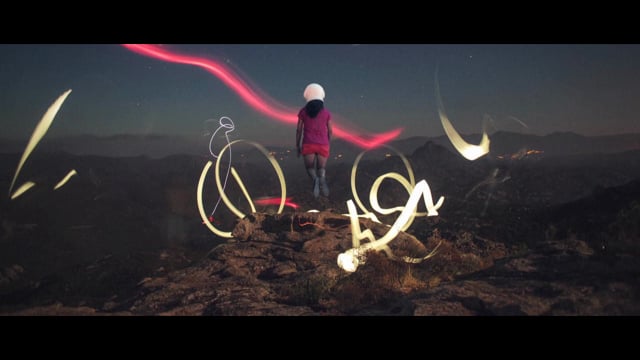
A young woman moves through a sun-baked, dreamlike landscape without ever touching the ground. She glides across sand, passes a swimming pool, and drifts into the water before continuing her impossible journey beneath the surface. Built around a fluid stop-motion illusion, the video turns ordinary movement into something weightless and surreal. "Parade" continues the story introduced in Rone's earlier "Gravity" video, again following the adventures of a floating woman played by Natalia Dufraisse.
Factoids & Trivia
- The video began as an experiment by Natalia Dufraisse and Filip Piskorzynski, combining a stop-motion jumping technique with elements of dance.
- Production lasted more than six months. Work began with a filmed sequence in Burkina Faso and continued in Belgium and Germany, with additional shooting taking place in Corsica.
- The Corsica footage was captured during a short break while Dufraisse and Piskorzynski were attending a film festival. Because of the intense heat, they mainly filmed in the early morning and evening.
- The story developed spontaneously during the Corsica shoot and was revised several times during production.
- Rone and Piskorzynski did not meet in person while the video was being made. They exchanged work-in-progress material and ideas by email, with Rone giving the filmmakers broad creative freedom.
- Dufraisse suggested using Rone's music for the experiment. The collaboration ultimately became a continuation of "Gravity," whose unexpected online success helped establish the floating-character concept.
- "Parade" was Rone's first music video made with real filmed footage, following earlier videos built around animation.
- The track appeared on Rone's second album, "Tohu Bohu," released in November 2012. A "Parade" EP followed on November 26, 2012, featuring remixes by Dominik Eulberg and Blind Digital Citizen.
- The video became one of the defining visual pieces associated with the "Tohu Bohu" era and helped bring wider attention to Rone's music beyond the electronic scene.