Alt-J (∆) - Fitzpleasure
Music Video
| Artist | Alt-J (∆) |
Wiki
Synopsis
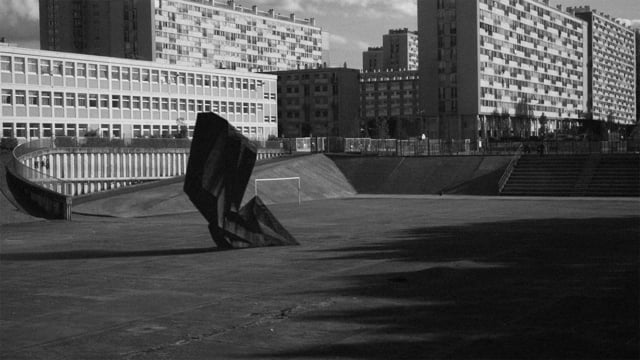
Shot in stark black and white, the video turns a rundown housing complex into a surreal parade of unsettling residents. Street dancers contort their bodies in unnatural ways, basketball players appear to have prosthetic limbs, and elderly men display bizarre facial features. Everyday urban scenes repeatedly rupture into visual impossibilities, creating a grim yet darkly comic portrait of a community where bodies, identities, and physical laws seem to be constantly mutating.
Factoids & Trivia
- The video was released on November 5, 2012, several months after "Fitzpleasure" appeared on alt-J's debut album, An Awesome Wave.
- Its central visual idea is post-production manipulation: arms, legs, eyelids, and facial features appear to twist or function in ways that would be impossible in ordinary footage.
- The clip was produced by Division Paris, with post-production handled by Home Digital Pictures and visual effects work by Mathematic.
- The song itself retells the story of Tralala, a character from Hubert Selby Jr.'s 1964 novel Last Exit to Brooklyn. The video does not illustrate that plot literally, instead translating the song's disturbing subject matter into a broader world of bodily distortion and social unease.
- "Fitzpleasure" has two notable music-video versions. An earlier art video was created through a collaboration involving French production company COSA and artist Wim Delvoye, while the black-and-white housing-estate video became the official version associated with the song.
- The earlier COSA version was filmed in a Paris studio in a single day and included Tim Steiner, whose tattooed back had previously been presented as one of Delvoye's living artworks.
- The video's lack of band performance was consistent with alt-J's early visual identity. Instead of showing the group playing, it builds a separate cinematic world around the song's unusual rhythm and imagery.