Barbra Streisand
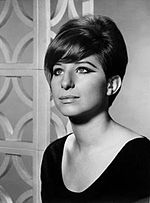

So far we've got credits spanning the years %1 to %2.
Works
Wiki
Biography
Barbra Streisand (born April 24, 1942) is an American singer, actress, songwriter, director, producer, and screenwriter whose career has encompassed popular music, Broadway, television, and film. Known for her powerful, highly controlled voice and distinctive interpretive style, she became one of the most successful recording artists and screen performers of the modern era. Her work is marked by a combination of technical precision, dramatic intensity, and an insistence on artistic control.
Streisand grew up in Brooklyn, New York, and began performing professionally in Manhattan nightclubs in the early 1960s. Her unusual voice and strong stage personality quickly attracted attention. She made her Broadway debut in I Can Get It for You Wholesale in 1962, earning a Tony nomination and the New York Drama Critics' Award. Her breakthrough came with the musical Funny Girl, in which she played comedian and entertainer Fanny Brice. The role established her as a major theatrical star and became the basis of her first feature film.
Her 1963 debut album, The Barbra Streisand Album, won the Grammy Awards for Album of the Year and Best Female Vocal Performance. Rather than follow a conventional pop career, Streisand built her recordings around carefully selected material from Broadway, the Great American Songbook, contemporary songwriting, and traditional pop. Albums such as People, My Name Is Barbra, Streisand, and The Broadway Album demonstrated her ability to turn songs into miniature dramatic performances. Her voice could move from intimate phrasing to sweeping climaxes while retaining a strong sense of lyrical meaning.
In 1968, Streisand reprised her signature stage role in Funny Girl and won the Academy Award for Best Actress. She followed it with a varied run of films, including Hello, Dolly!, On a Clear Day You Can See Forever, What's Up, Doc?, and The Way We Were. The latter, a romantic drama opposite Robert Redford, produced one of her most enduring recordings in its title song. Her film career reached another commercial peak with A Star Is Born in 1976. Streisand starred as an aspiring singer and recorded the soundtrack, co-writing its central song, Evergreen. The song won the Academy Award for Best Original Song, making Streisand the first woman to receive that honor as a composer.
Streisand expanded her influence behind the camera with Yentl (1983), a musical drama based on an Isaac Bashevis Singer story. She directed, produced, co-wrote, and starred in the film, a combination that made her a pioneering figure for women working in major Hollywood productions. Yentl received several Academy Award nominations and earned her Golden Globe Awards for directing and producing. She later directed and produced The Prince of Tides (1991), which received multiple Oscar nominations, and The Mirror Has Two Faces (1996).
Her recording career continued through albums of standards, original pop, film music, and collaborations. Guilty, her 1980 album with Barry Gibb, became one of the best-selling releases of her career and yielded several international hits. She also maintained a selective concert and television presence, with specials such as My Name Is Barbra and Barbra Streisand: The Concert receiving major critical and industry recognition.
Streisand's honors include multiple Academy Awards, Grammy Awards, Emmy Awards, Golden Globe Awards, a special Tony Award, the Kennedy Center Honors, the Presidential Medal of Freedom, and the American Film Institute's Life Achievement Award. Alongside her entertainment work, she has been an outspoken supporter of civil liberties, women's rights, environmental causes, and progressive political campaigns. Her memoir, My Name Is Barbra, was published in 2023, adding a reflective account of a career defined by ambition, reinvention, and an unusually direct relationship between performer and audience.