Gene Kelly

So far we've got credits spanning the years %1 to %2.
Works
Wiki
Biography
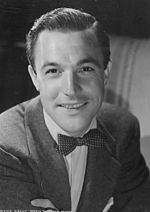
Gene Kelly (August 23, 1912 - February 2, 1996) was an American dancer, actor, singer, choreographer, director, and producer whose work transformed the Hollywood musical. Known for his athletic, confident style, Kelly brought a physical directness to screen dancing that contrasted with the formal elegance associated with earlier musical stars. He helped establish dance as a central dramatic and cinematic language rather than a decorative interlude.
Born Eugene Curran Kelly in Pittsburgh, Pennsylvania, he studied economics at the University of Pittsburgh while performing and teaching dance. During the 1930s, he worked in dance schools, summer stock, vaudeville, and on the Broadway stage. His breakthrough came with The Time of Your Life, in which he played the dancer Harry the Hoofer. He became a major Broadway star in Pal Joey in 1940, attracting the attention of Hollywood and signing with Metro-Goldwyn-Mayer.
Kelly made his film debut opposite Judy Garland in For Me and My Gal (1942). He quickly became known not only as a performer but also as an inventive choreographer. In Cover Girl (1944), he created the celebrated "Alter Ego" sequence, using optical effects to stage a confrontation between himself and a dancing double. His work in Anchors Aweigh (1945), including a technically ambitious dance with the animated character Jerry, further demonstrated his interest in combining live action, animation, camera movement, and choreography.
After the war, Kelly became one of the defining figures of the MGM musical. He co-directed On the Town (1949) with Stanley Donen, taking the film beyond studio sets and into the actual streets of New York. The film's location shooting and energetic integration of dance, music, and urban movement marked an important change in the genre. Kelly and Donen continued their collaboration with It's Always Fair Weather (1955), while Kelly also appeared in such major productions as The Pirate (1948), Summer Stock (1950), Brigadoon (1954), and Les Girls (1957).
His most enduring achievements were An American in Paris (1951) and Singin' in the Rain (1952). In the former, Kelly played an American painter in Paris and performed an extended ballet finale inspired by the visual language of French art. The latter, co-directed and choreographed by Kelly and Donen, combined comedy, romance, and backstage satire with a series of landmark musical numbers. Kelly's performance of the title song, staged around an umbrella and a rain-soaked street, became one of the most recognizable images in American cinema.
As the popularity of movie musicals declined, Kelly expanded into dramatic acting and directing. He appeared in films such as Inherit the Wind (1960) and What a Way to Go! (1964), and directed Invitation to the Dance (1956), Hello, Dolly! (1969), and The Cheyenne Social Club (1970). He also worked in television, including children's and variety programming.
Kelly received an honorary Academy Award for his contributions to film choreography and was later recognized with the Kennedy Center Honors, the American Film Institute's Life Achievement Award, and a Screen Actors Guild life achievement award. His influence remains central to the history of screen dance: he made movement look spontaneous, masculine, playful, and emotionally expressive, while treating the camera as an active partner in choreography. His films, particularly An American in Paris and Singin' in the Rain, continue to define the possibilities of the American musical.