Mr. Scruff - Get A Move On
Music Video
| Artist | Mr. Scruff |
| Song | Get A Move On |
| Director | Mr. Scruff |
| Director | Warren Edmond |
| Genre | Dance & Electronica |
| Intro | No |
| Outro | No |
| Sound Mix | Stereo |
| Technical Specifications | colour - format unknown |
Wiki
Synopsis
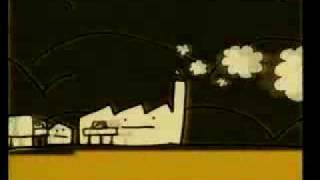
Mr. Scruff's "Get A Move On" video presents a sepia-toned cartoon world built from loose, hand-drawn lines and constantly shifting perspectives. Simple characters, vehicles, machines and other curious figures move through looping scenes that expand and contract with the rhythm. Repeated actions become part of the groove, while three-dimensional effects, wavy distortions and abrupt angles keep the imagery in motion. Rather than following a conventional narrative, the video turns Scruff's playful illustrations into a kinetic visual counterpart to the track's jazz-inflected beat.
Factoids & Trivia
- The video uses Mr. Scruff's own cartoon artwork, presented in a sepia palette that gives the animation the appearance of an old illustrated film.
- Its visual language relies heavily on repetition, rhythmic synchronization, unusual camera angles and pseudo-three-dimensional movement. The result mirrors the track's sample-based construction instead of telling a conventional story.
- The video was included as an enhanced-CD feature on the 2001 re-release of "Get A Move On," helping make it an early example of music-video material bundled with a single in computer-playable form.
- Mr. Scruff, whose real name is Andy Carthy, studied fine art and created the loose-lined cartoon style associated with his record sleeves, promotional material and live visuals.
- The single was first released by Ninja Tune in 1999. Its prominent melodic material comes from Moondog's "Bird's Lament," with additional vocal and blues elements drawn from recordings associated with T-Bone Walker and Rubberlegs Williams.
- "Get A Move On" became widely recognizable through advertising, including campaigns for France Telecom and Lincoln Navigator. It was also used in Volvo advertising in North America and Germany.
- The video later appeared alongside Scruff's other animated work on the 2003 Mr. Scruff Video DVD, which also featured "Honeydew" and "Sweet Smoke."
- The track's exposure in commercials and television helped turn what began as a Ninja Tune club release into Mr. Scruff's best-known recording and a frequently cited early example of the electro-swing sound.