BR5-49 - Cherokee Boogie
Music Video
| 1996
| Artist | BR5-49 |
| Song | Cherokee Boogie |
| Album | BR5-49 |
| Intro | No |
| Outro | No |
| Sound Mix | Stereo |
| Technical Specifications | colour - format unknown |
Wiki
Synopsis
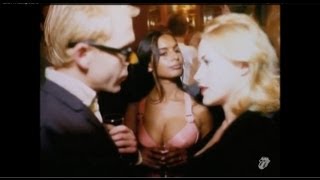
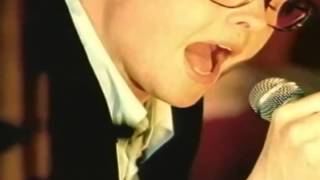
BR5-49 perform "Cherokee Boogie" for a succession of vividly mismatched audiences. The band's old-school country and rockabilly presentation is placed alongside bikers, ska-styled youths, honky-tonk regulars and a crowd that evokes classic country television. The deliberately broad, playful staging turns the performance into a meeting point for Nashville's traditionalists, barroom characters and alternative-minded music fans. Rather than building a conventional narrative, the video uses quick changes in audience and setting to emphasize the band's appeal across several subcultures.
Factoids & Trivia
- "Cherokee Boogie" was the lead single from BR5-49's 1996 self-titled major-label debut on Arista Nashville.
- The song is a cover of the 1951 Moon Mullican recording, written by Mullican and Chief William Redbird. BR5-49 approached it as part of their larger revival of pre-rock country, hillbilly and rockabilly styles.
- The video reflects the band's real Nashville identity. Before signing with Arista, BR5-49 built its reputation through long, regular sets at Robert's Western World on Lower Broadway.
- Much of the video's visual humor comes from the collision of audience types, including bikers, ska fans and traditional country characters. That mixture mirrors the band's unusual position between honky-tonk authenticity and the alternative-country scene.
- The performance was filmed in and around Robert's Western World, the venue closely associated with the band's early career.
- The single reached No. 44 on the US country chart and No. 21 on Canada's country chart. It also earned BR5-49 a 1997 Grammy nomination for Best Country Performance by a Duo or Group with Vocal.
- The band's name itself comes from the used-car dealer telephone number featured in a recurring Junior Samples sketch on the television show "Hee Haw," making the video's old-fashioned television imagery especially appropriate.
- The song's 1951 lyrics use language and imagery that can feel dated or offensive to modern listeners. The video preserves the song's period-minded novelty presentation rather than attempting to update its wording.