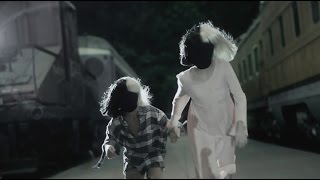
Malcolm McLaren - Double Dutch
Music Video
| Artist | Malcolm McLaren |
| Song | Double Dutch |
| Director | Malcolm McLaren |
| Intro | No |
| Outro | No |
| Label | Island Records |
| Sound Mix | Stereo |
| Technical Specifications | colour - format unknown |
Wiki
Synopsis
Malcolm McLaren brings the New York double Dutch scene into a brightly lit school gym, where teams of young jump-rope performers turn the playground game into a tightly choreographed spectacle. The Ebonettes and other American Double Dutch League troupes leap, spin, and trade routines as McLaren appears among them, delivering the track's spoken and sung cues. The video emphasizes rhythm, teamwork, and athletic precision, matching the song's blend of South African grooves, hip-hop energy, and playground chants.
Factoids & Trivia
- The video features McLaren alongside troupes from the American Double Dutch League, with the action staged in a school gymnasium.
- The Ebonettes are especially prominent. Their name is used as a recurring chant in the chorus, linking the record directly to one of New York's best-known double Dutch teams.
- The skipping sounds heard on the record were recorded in New York. Engineer Gary Langan captured the performers at the Power Station, the Manhattan studio that had recently become associated with major sessions including David Bowie's "Let's Dance."
- The track's rhythmic foundation came from South African sessions, while the New York skipping recordings supplied its most distinctive percussive element. The material was then assembled in London by the production team led by Trevor Horn.
- "Double Dutch" was released as a single on June 24, 1983, from McLaren's album "Duck Rock." It reached No. 3 on the UK Singles Chart, making it his highest-charting single.
- The song became part of a wider visual project around "Duck Rock." A 2008 reissue was accompanied by previously unseen film material featuring early hip-hop footage, scenes from Soweto, and an extended "Double Dutch" video.
- The record later became a source for sampling, including extensive use by Dope Smugglaz on their 1999 track "Double Double Dutch."
- The song also carries a disputed publishing history. Its resemblance to the Boyoyo Boys' South African recording "Puleng" led to a legal settlement, after which several South African musicians were added to the credited songwriting.
Lyrics
|
All over the world high school girls Take to the ropes and turn them slow Starts a beat and a loop they skip and jump thru the hoop They might break and they might fall About the gals from New York City donY They just start again start again. Heh ebo ebonettes heh ebo ebonettes ... |
© Malcolm McLaren - Double Dutch.
This is an excerpt, provided as citation under fair-use.